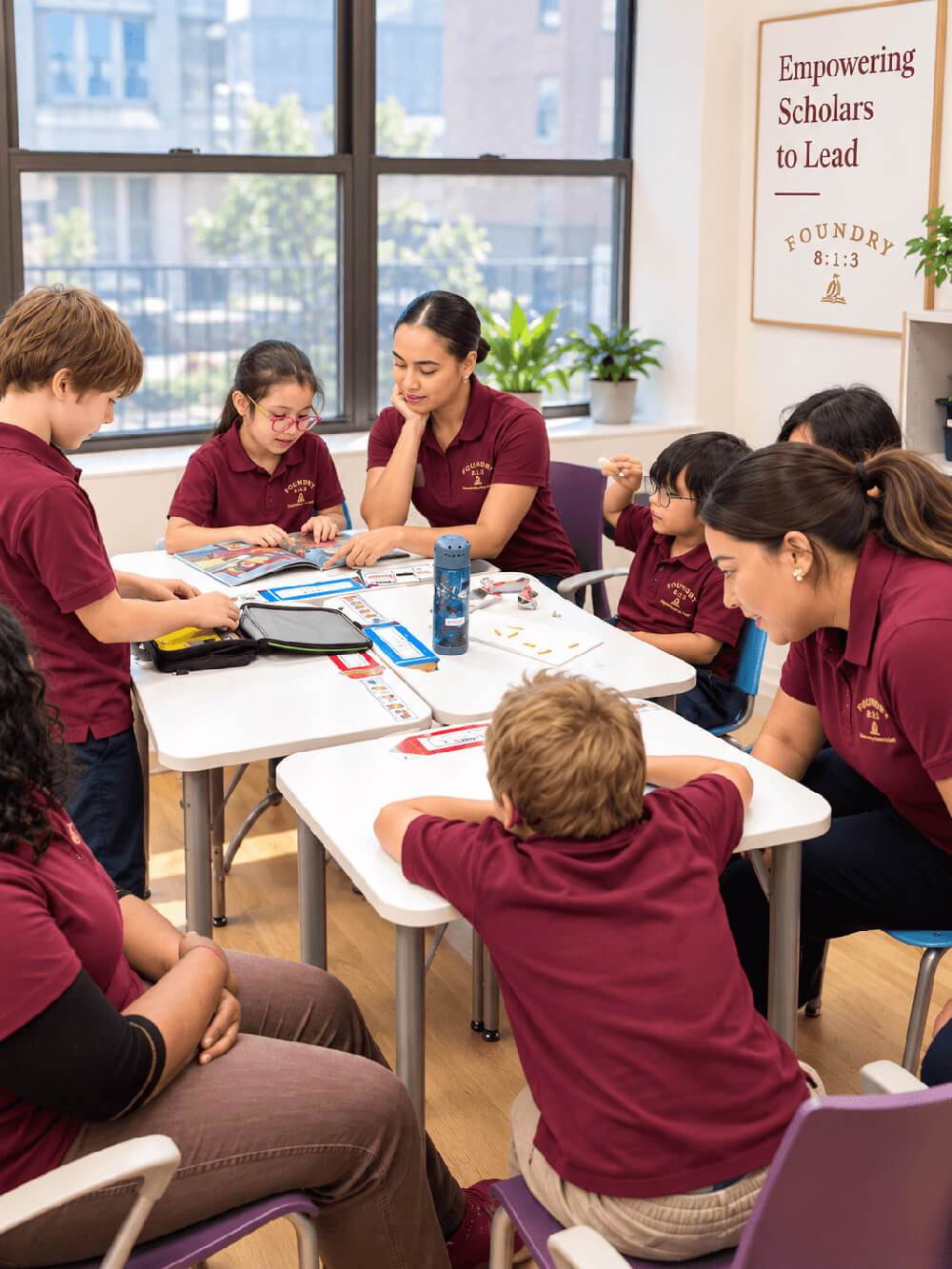
Foundry 8:1:3 provides structured, evidence-based instruction for students whose primary educational needs center on access to learning, skill acquisition, communication, academic engagement, and increasing independence. Our model is grounded in ABA and designed to systematically strengthen skills while building each learner’s confidence, participation, and independence over time.
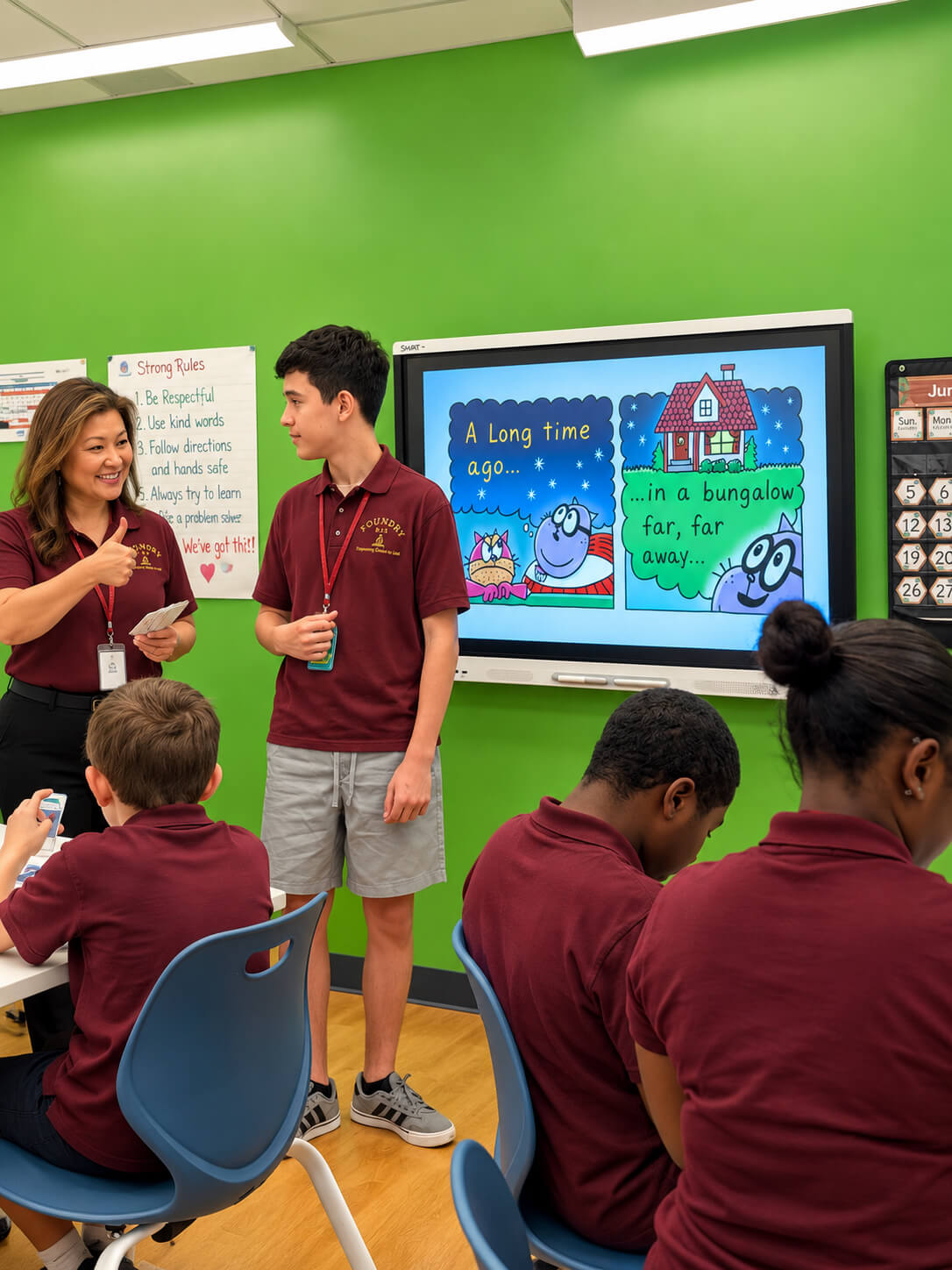
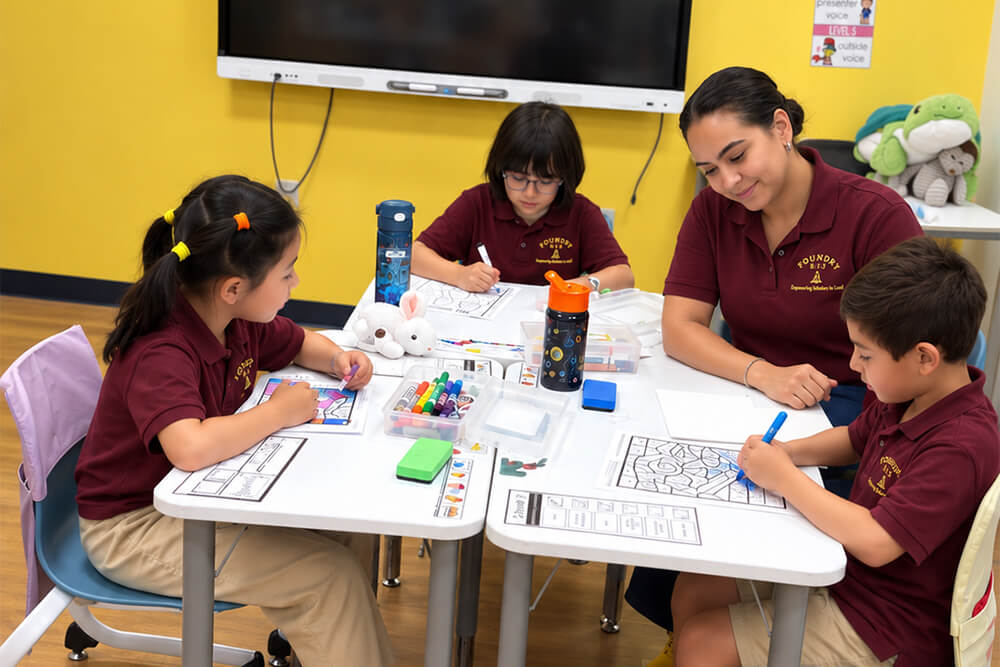
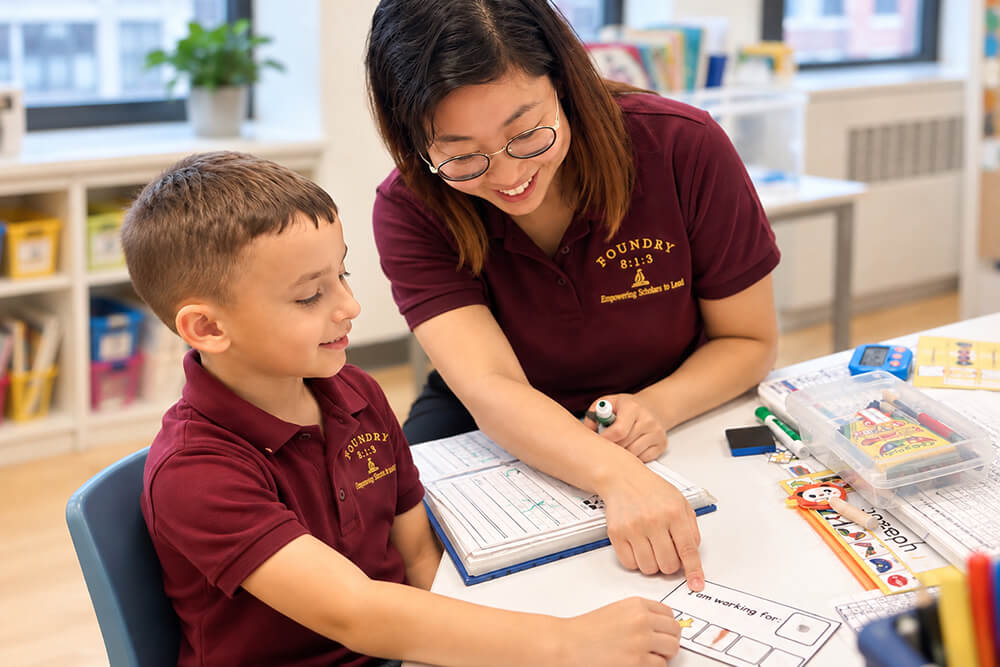
Each classroom serves up to eight students with one Head Teacher and three Assistant Teachers, supported by ongoing BCBA supervision and program oversight. This structure allows students to receive intensive individualized teaching while also developing the skills needed to participate successfully in small-group and peer learning.
Instruction shifts intentionally between individualized and small-group formats. Students receive the level of support needed to learn successfully, while staff systematically build participation, stamina, independent responding, and engagement with peers. Support is adjusted as student performance changes, with the goal of increasing independence rather than maintaining unnecessary adult dependence.
The principles of Applied Behavior Analysis (ABA) are integrated throughout our instructional approach, helping educators understand how each student learns and how teaching can be most effective. Ongoing assessment and student performance guide instructional decisions, allowing our team to continually refine teaching, build on progress, and respond to each learner’s evolving needs.
Learning becomes meaningful when a skill can be used independently and by choice.
Consider learning to ride a bicycle: The goal is not simply to demonstrate that you can ride once. With practice, riding becomes fluent: You can ride on different paths, adjust to changing conditions, and use the skill in different situations. Most importantly, once you know how to ride, you have a choice. You may ride because it is an enjoyable activity, because it is a convenient way to get somewhere, or you may choose not to ride at all. At Foundry 8:1:3, we approach learning with the same purpose. We help students build skills to fluency and apply them across people, settings, and experiences so that what they learn creates greater independence, participation, and meaningful choices in their lives.
Meaningful progress happens when everyone supporting a scholar works together.
At Foundry 8:1:3, learning is a shared effort. Teachers, BCBAs, related service providers, and program leaders work collaboratively to understand each scholar’s strengths, identify priorities, and coordinate instruction and support. Families are essential partners in this process, and when appropriate, we collaborate with home-based providers and other members of a scholar’s broader support team. By connecting learning across people and environments, we help scholars use developing skills more independently and meaningfully across school, home, and community.

At Foundry 8:1:3, we approach learning with the same purpose. We help students build skills to fluency and apply them across people, settings, and experiences so that what they learn creates greater independence, participation, and meaningful choices in their lives.
The purpose of education extends beyond acquiring individual skills.
At Foundry 8:1:3, we want students to become critical thinkers and problem-solvers who can use what they know to navigate new situations, make meaningful choices, and take an increasingly active role in shaping their own lives.
We continually ask, “what comes next?” and “what is meaningful for this learner?”
The answer will look different for every student. By building knowledge, communication, self-advocacy, critical thinking, problem-solving, and independence, we help students develop more choices about how they learn, participate, work, connect with others, and live. Our goal is not to define what a successful life should look like, but to give each student the skills and confidence to pursue a life that is increasingly their own.